
Introduction
Health outcomes are the product of dynamic forces: culture and social change. These constructs shape how people perceive their bodies, interact with doctors, and can liberate or hinder health autonomy.
The Theory of Planned Behavior (TPB) model postulates that social pressures influence behavior which then guide health engagement.1 Similarly, the Health Belief Model highlights how perceived barriers – such as stigma – can impact behavior.2 Both models apply to this study, connecting sociocultural considerations with reproductive health.
Thailand provides a compelling example of the models’ relationships, especially through “greng jai,” a Thai cultural concept regarding avoidance of imposing inconvenience or discomfort.3,4 Greng jai influences Thai patients to question physician authority less, potentially hindering autonomy in their care due to fear of displeasure or confrontation. Cultural constructs, like greng jai, may manifest in reproductive health engagement, as decreased autonomy is associated with lower likelihood of prenatal and postnatal care and contraception use.5 Women’s hesitancy to assert themselves appears to lead to unmet healthcare needs, namely cervical cancer screenings.
Although cervical cancer incidence in Thailand has decreased from 18.1 to 10.3 per 100,000 (2001–2021), mortality has risen from 5.9 to 6.8 deaths per 100,000 (2012–2021).6 This underscores the need to address upstream socio-behavioral influences in primary care promotion. Similarly, understanding how adolescents view contraception initiation can protect against unplanned pregnancy and substantial downstream consequences for education and financial stability.7
Thai culture has experienced ongoing negotiations between cultural continuity and change.8 Older generations emphasize values such as hard work, family loyalty, and adherence to tradition while younger generations are described as individualistic, technologically savvy, and open to new social ideas.9 As Thai culture becomes more liberal and individualistic, this may influence how women of different ages perceive and engage with reproductive health, especially since media and internet catalyze cultural exchange, ideological progression, and social change.10
This qualitative study explores how Thai women across three age groups – young (18-34 years), middle-aged (35-59 years), and elderly (60+ years) – understand and interface with their reproductive health, particularly how sociocultural factors shape their experiences in health systems.
Methods
A qualitative approach with individual in-depth interviews was conducted by the Principal Investigator of this study. A Thai-to-English interpreter was used for non-English speaking participants. Remote and in-person interviews were recorded in real-time and transcribed afterwards in English.
The subject population consisted of 21 women: 6 elderly (60+ years), 8 middle-aged (35-59 years), and 7 young (18-34 years). Participants must have been born and raised in Thailand with active Thai citizenship at the time of interview. Of the 21 interviews, 10 were conducted in-person in Bangkok and the remaining were completed over the phone from the United States. The sampling was purposive, selecting participants whose experiences were relevant to the phenomenon of interest.11 The snowball sampling method allowed for subjects to refer members of their personal network to participate in the study. Demographic variables were not systematically collected across the full sample, but partial information was recorded. Participants came from a range of occupations (education, healthcare-adjacent roles, administrative positions, retirees) and living situations (urban, rural, and rural-to-urban migration patterns).
The interview guide was sectioned by topic (ref. Table 1). Questions were designed for participant introspection with follow-up questions to elicit more detail. Lifestyle and comorbidity questions contextualized findings and informed researchers’ broader understanding, yet they were outside the thematic scope and did not contribute to the reported results. Coding was conducted in two iterative cycles three months apart. Cycle 1 focused on trialing codes and identifying preliminary themes, while cycle 2 allowed for further reflection, refinement of interpretations, and increased analytic consistency. Thematic patterns were identified through inductive analysis with generational comparisons, following the reflexive thematic analysis approach.12,13All analysis was performed on NVivo 15.14 This study was reviewed by the Tulane University Institutional Review Board and deemed to be exempt.
Results
Among the 21 subjects, 9 women had never been pregnant before and 12 had been pregnant and birthed at least one child.
Three major themes emerged: intergenerational knowledge transmission, generational disagreement in reproductive health autonomy, and perpetuation of social standards and stigma.
Theme 1: Intergenerational Knowledge Transmission
Female family members (FFM) play a vital role in preparatory and reactive menstruation teaching. The results demonstrate this point, as approximately 50% of the subjects mentioned family involvement in their menstrual health education. Otherwise, women learned basic knowledge from school, including how to clean menstrual blood. FFM frequently responded reactively, offering advice only after menarche. One subject assumed the process was pathologic:
“I was really scared – I thought there was something wrong with me because I didn’t know what it was. Just saw the blood. I had it for the first time at 11… I was so scared. I cried and ran to my mom.” [ID #072224, young]
.png)
Thai traditional medicine (TTM) was another channel for informal education. Multiple generations cited TTM-aligned dietary changes to optimize breastfeeding, like avoiding certain temperature foods to maintain milk quality. However, women who birthed at home were all elderly subjects; they did so out of necessity, utilizing traditional medical practices. Both elderly women lived in rural areas and prolonged travel to a hospital would have threatened both maternal and fetal life. Both women were assisted by a maw thum yae (หมอตำแย): village women trained by prior generations of practitioners. Notably, one subject’s mother was their village’s maw thum yae:
"They don’t even have a sharp knife to cut the umbilical cord, they used a ceramic bowl. They broke it and used that to cut the umbilical cord. Because you don’t want [infection]…the ceramic bowl is clean and you use it one time then toss it… they had a plastic container that the [maw thum yae] put [the placenta] in. And then the [maw thum yae] put ash from burning wood to get rid of the odor. "[ID #0510242, elderly]
TTM remains an important fixture in Thai culture and reproductive health education, leaning on intergenerational knowledge transmission. Generational knowledge inheritance shapes the way Thai women perceive, understand, and manage health over their lifetimes.
Theme 2: Generational patterns in reproductive health autonomy
General patterns emerged in 2 main categories: abortion and contraception. Abortion supporters reported increased strain on society if the mother decides to forfeit their newborn. Younger women were the predominant, unanimous abortion supporters; they emphasized quality of life, readiness, and the mother’s financial status, rather than religiosity. Middle-age women constituted the majority of abortion objectors that cited Buddhism. Elderly women condemned abortion for religious reasons, associating the act with sin and taking of life.
“I disagree with abortion because it is a big sin to take life. It’s an unborn child – if you made it happen, you should take responsibility…personally, I think it is such a sin that I do not support it.” [ID #051024, elderly]
Young and middle-aged women expressed comfort in discussing contraception with peers. In contrast, elderly women were uncomfortable with addressing the topic publicly; they felt Thai culture is not yet supportive of contraception as a nonchalant conversation topic. Across all age-groups, the majority of participants stated commitment to a serious relationship should prompt contraception use rather than menarche.
Cross-generationally, women associated serious relationships with sexual activity (Table 1). Although family planning is seemingly becoming more autonomous, for one subject, autonomy was entirely absent.
“The doctor didn’t tell me anything during pregnancy, no advice whatsoever… after birth, I got my tubes tied. The doctor did it without asking me.” [ID 0512242, elderly]
Theme 3: Perpetuation of social standards and stigma
Social conventions and reproductive health stigma persist in Thai culture as evidenced by tampon use. Despite 3 of the 21 subjects trying them, all promptly discontinued their use. Overall, no participants currently use them, repeatedly remarking concerns about “getting them stuck,” the penetrative mechanism, hygiene, and infection risk.
“I’m afraid to use it because it might get stuck in there, I also think it is very dirty. You can get an infection from using the tampon because it stays inside – I don’t know what’s going on in there.”[ID #020124, middle-age]
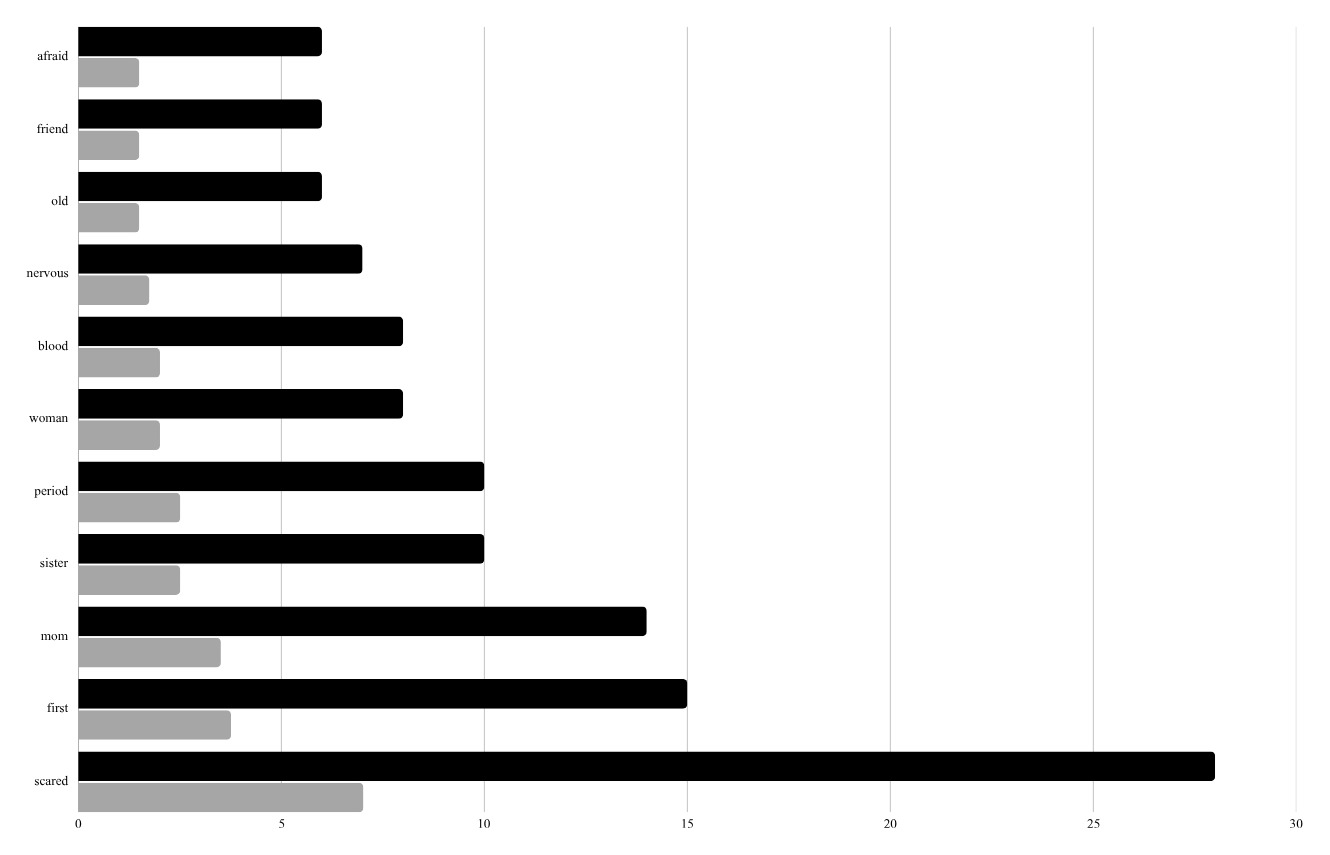
Formal menstruation education is generally not standardized or mandated in Thailand; therefore, informal education through mothers, sisters, aunts, and friends is typical. Menarche experiences are faced with mixed-emotions due to varying familiarity and preparation beforehand (Figure 1).
Results showed subjects had either a neutral or negative experience with menarche. Although some subjects were taught about menstruation before menarche, menstruation symptoms still provoked emotional reactions. The women who were not taught about menstruation beforehand were equally confused and scared:
“I was told about how it happened and what to do when it happened. I had it when I was 15. I was scared…what is going on with my body? Suddenly the blood came out. In the past… no media to show you what’s going on.” [ID 0514232, middle-age]
Observed generational consistencies in healthcare experiences demonstrate that Thai women continue to share values around bodily modesty and frugality in healthcare engagement. When asked about visiting a doctor regularly, women were hesitant, mentioning busy schedules, shyness, or lack of illness or symptoms. For many, their first experience interacting with an OB/GYN was due to health changes such as pregnancy or menopause. All generations generally preferred having female physicians or would have liked a female chaperone for male doctors; they were more shy around male doctors, specifically during vulnerable procedures, such as pelvic exams and pap smears. Modesty remains a poignant cultural value as participants preferred female OB/GYNs or a chaperone present. Overall, subjects utilized care through a problem-based lens rather than preventative or maintenance-based approaches.
Discussion
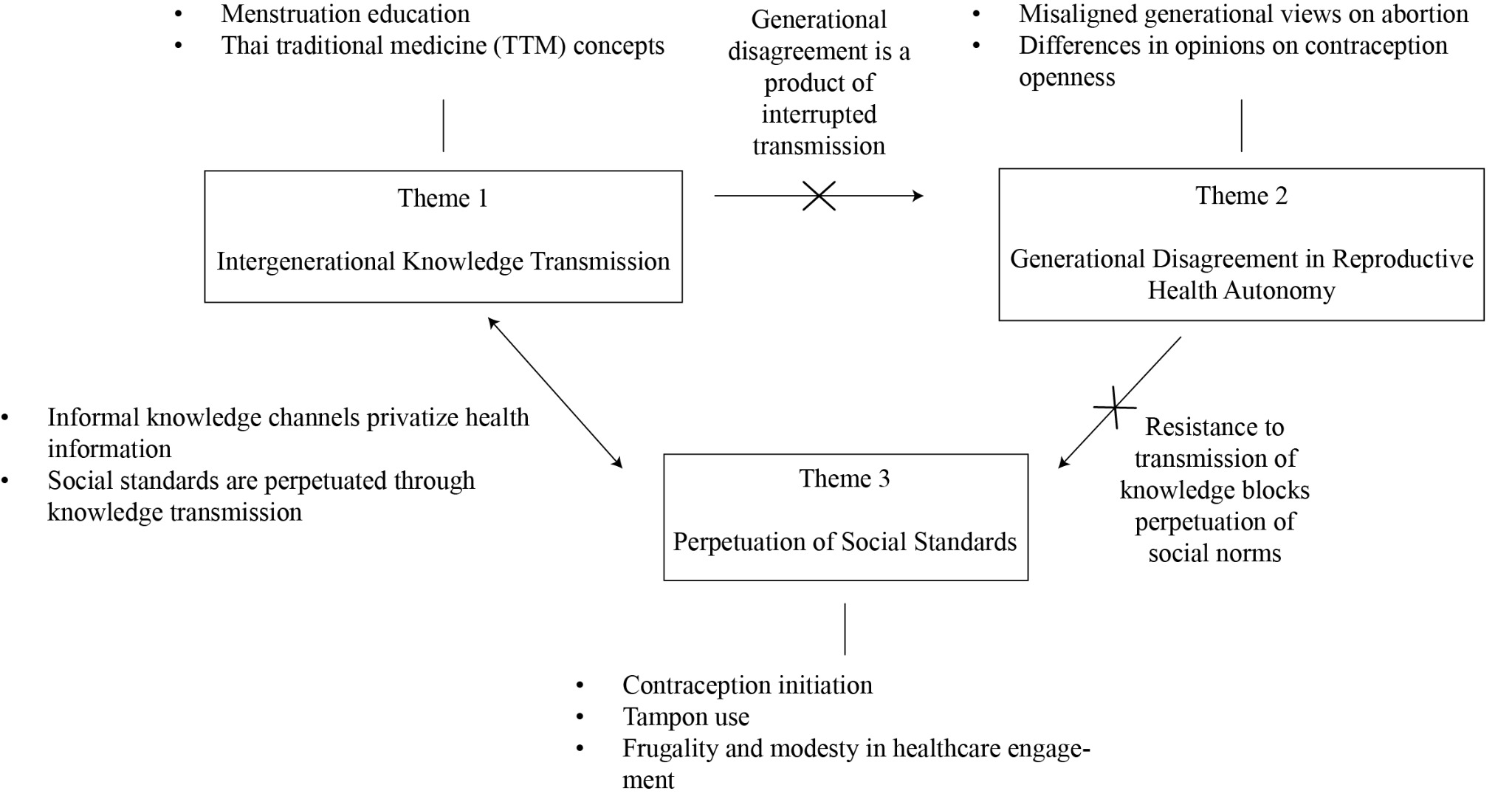
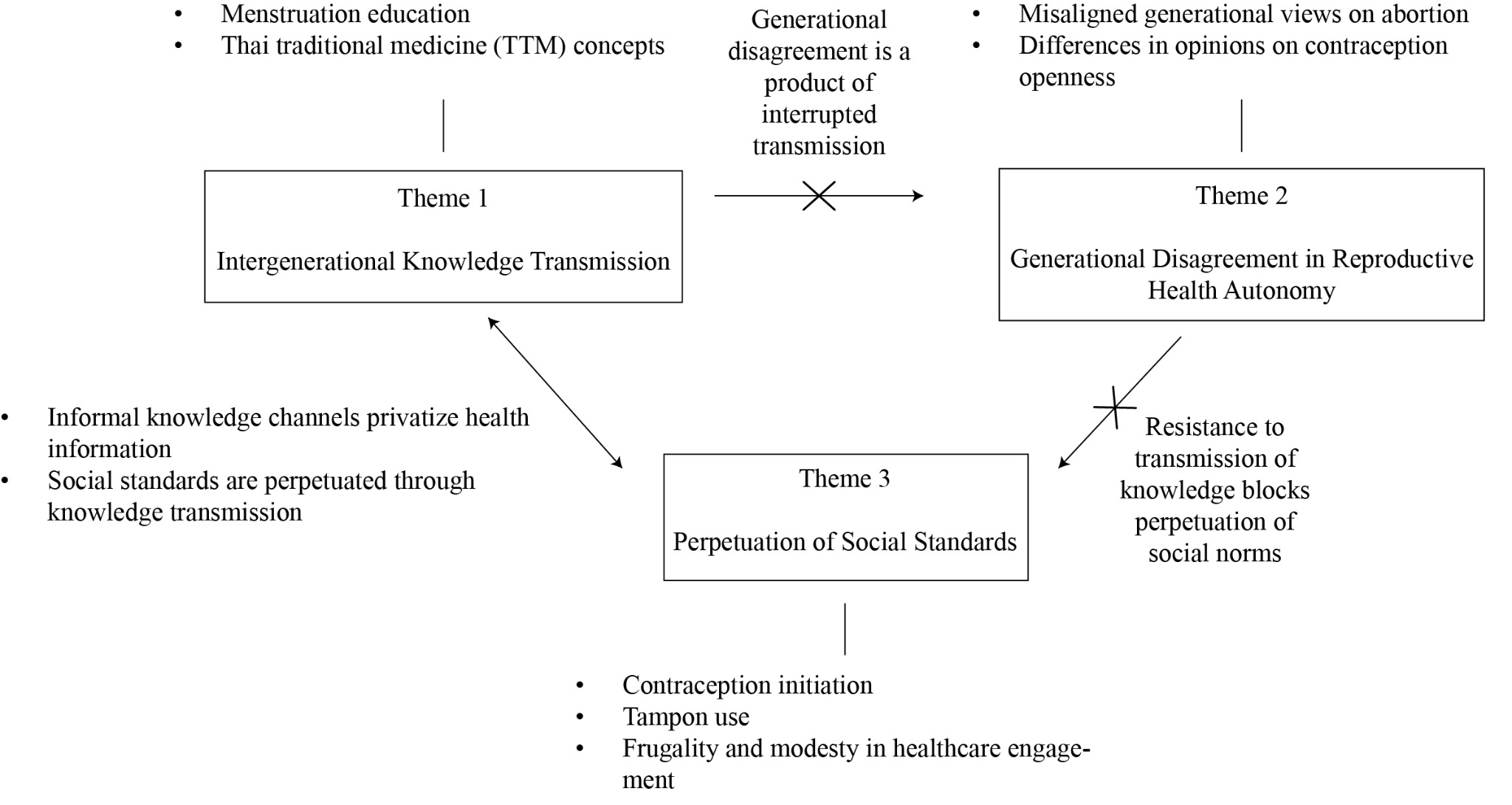
Culture sets the tone for reproductive health and sexual health engagement. The three major themes outline how this manifests cross-generationally:
-
Intergenerational knowledge transmission
-
Generational disagreement in reproductive health autonomy
-
Perpetuation of social standards and stigma
Themes 1 and 3 are intertwined because intergenerational knowledge transmission privatizes discussion around stigmatized topics and sensitive information (Figure 2). However, it is still education which otherwise may never be delivered. Despite stigma hindering information dissemination and engagement, TTM and familial wisdom may uplift health and holistic care.15,16 Theme 3 confirms Thai cultural conventions and stigma remain a constant. When subjects were asked about tampon aversion, they drew reflexive connections between tampons and societal notions on sexual purity. These principles align with previous research on Thai and other Asian women’s ideals around preserving virginity.17
In comparing our findings to the literature, the results differ: Research among vocational school participants in Northern Thailand showed adolescents with casual partners were 7.7 times more likely to use contraception than those in committed relationships; sex workers showed similar patterns at 7.4 times more likely.18 This quantitative divergence from our study captures an intriguing dissonance between Thai women’s ideation and actuality. Although they may idealize contraception initiation within serious relationships, behavioral data suggests younger women are initiating sooner in practice.18,19
Generational differences in abortion demonstrated conservative beliefs from the middle-aged while young women were progressive, indicating a shift towards more liberal views. However, opposing Buddhist ideals could delay progression since Buddhism is a fixture of Thai culture as evidenced by surveys from young medical graduates and nurses who hesitate to offer abortion services.20,21 In contrast, a study evaluating attitude change in abortion training demonstrated optimism in shifting providers’ perceptions.22,23
Theme 3 presented in approaches to healthcare; the observed norm for Thai women is seeking healthcare more for illness than for prevention. Likewise, embarrassment or asymptomatic status contributes to decreased health maintenance visits.24 It is plausible that these sentiments reinforce the deferential behavior seen in greng jai by fostering concern about imposing on physicians. Clinical medicine and public health play integral roles in building consistent educational and social programming to encourage routine doctor visits. Furthermore, physicians should be aware of sensitivities around penetrative products and procedures, and they should be prepared to field patients’ doubts to initiate contraception, including beliefs about relationship status and sexual activity.
Theme 2 exemplifies how greng jai can influence health autonomy and potentially dictate healthcare engagement. It advises physicians on navigating broader power dynamics and healthcare patterns; for example, the experience of the subject who underwent a non-consensual tubal ligation aligns with prior research. One study found statistical significance between Caesarean deliveries and immediate postpartum sterilization, situating the practice in Thailand’s efforts to curb population growth in the 1970s; notably, 17% of Thai women were reported to have been sterilized within their first postpartum month.25,26 These patterns may reflect systems’ prioritization of procedural efficiency, however, this study’s findings and literature raise questions about how patient-centered decision-making fits into these contexts.
Overall, study insights can be situated within Ross and Solinger’s reproductive justice framework, which equally upholds the right to end a pregnancy and the right to motherhood. This study complements the tenets of the framework through centrality of storytelling and how social institutions and culture affect women’s reproductive lives.27 The account of an elderly subject who received a non-consensual tubal ligation illustrates a violation of her right to motherhood, one that reflects wider patterns of diminished patient autonomy in her culture. Similarly, the two elderly women who had to give birth at home – due to hospital distance – points to disparities in healthcare access on a geographic level.
While this study was not designed to examine geographic disparities, these women’s stories serve as platforms for future reproductive health equity research in Thailand. This analysis motivates the need for research and interventions that address interpersonal stigma, geographic disparities in healthcare access, and promote primary care utilization.
This study’s potential limitations include small sample size, mixed interview formats, and presence of an interpreter. Considering the smaller sample, cross-generation comparisons were less reliable. The interpreter was a middle-age Thai native, and their presence may have impacted interviewees’ responses. Iterative coding, reflexivity, and structured coding and analysis strengthened methodological rigor.
Conclusion
The goal of this research was to examine the effects of culture on health across time through interviews with three generations of Thai women. Findings showed that younger women were more progressive than middle-aged and elderly women, particularly regarding abortion, with no young women identifying as objectors. Middle-aged women yielded mixed results: they aligned with the younger generation in discussing contraception openly, but sided with the elderly in religious beliefs on abortion. Elderly women were the only group to have experienced home births as predicted; however, they were outnumbered by middle-aged women in abortion objection, an unanticipated finding. Despite this, elderly women continued to preserve traditional conventions.
Thai adolescents often adopt Western culture, but it is frequently curbed by cultural values bestowed by older generations who value Thai tradition, thereby creating tension and a “dual identity”.15 This strain was evident in young women’s opinions regarding tampon use and contraception initiation as perspectives aligned with traditional values, rather than progressive cultural exchange.
Traditionalism was not uniform: although contraception initiation was linked to relationship status, greng jai appears to shape comfort level in peer discussion. Avoiding candid discussion of contraception may reflect an effort to prevent imposing discomfort on others in social exchange, consistent with greng jai’s underlying logic. Middle-aged and young women’s candor might suggest a weakening of greng jai, whereas elderly women’s preference for privacy may reinforce it. In contrast, greng jai did not account for purity concerns, suggesting that purity-based modesty operates as a distinct cultural construct rather than an expression of imposition avoidance.
Women aged 45-59 tended to reject premarital sex, which has been found in the literature on Thai sexual attitudes.24 Similarly in this study, the majority of elderly women supported contraception initiation with committal relationships. Overall, research indicates that reproductive health attitudes are likely the product of push-and-pull forces between cultural tradition and novelty.
Thai people are attuned to identity, valuing dignity and pride highly. This is applicable to our study and to global audiences. The data establishes range in generational trends, and although shifts in norms have been observed, social change is deliberately paced to conserve cultural identity.1 Assessing the fixity of a social convention can guide cultural sensitivities when interacting with Thai patients, as persistence of norms may be a proxy for higher social value. The speed of social change in areas of women’s health – contraception, abortion, menstruation, etc. – are seemingly impacted accordingly.
Future research should further examine how shifting societal norms shape health behaviors and engagement across public health and medical contexts. This research reinforces the idea that culture is intertwined with health, and that assessing social and behavioral climates are vital for health promotion at the individual, community, and population levels.
Disclosure Statement
The authors used Claude 1.8555.2 (a476c3) 2026-05-22T23:04:37.000Z for formatting of tables 1 and 2, and for grammar and language editing of the manuscript. All of Claude’s outputs were reviewed and accepted by the corresponding author. No substantive content was generated by AI.
The authors have no relevant or financial disclosures or conflicts of interest.
About the Author(s)
Olivia French, MD, MPH
Olivia French is a recent MD/MPH graduate from Tulane University. Her research interests are in global health, reproductive health, and cultural anthropology. Olivia’s work is primarily focused on the impacts of culture and stigma on health. She is becoming a pediatric resident this July.
Mai Do, MD, MPH, DrPH
Mai Do, MD, DrPH received her medical training in Vietnam and public health training in the US. She has more than two decades of research experience in reproductive health, and access, quality, and utilization of health care services in international settings.
Kanokwan Tharawan, PhD
Dr. Kanokwan Tharawan is a cultural/medical anthropologist. She has worked in Thailand in the field of sexual and reproductive health and rights for the past three decades. She is a women’s health advocate and a gender specialist. Dr.Kanokwan works to ensure that health needs among vulnerable populations are visible to policy communities and appropriate policies are designed and implemented to respond to the needs. She is currently an assistant professor at Institute for Population and Social Research, Mahidol University.
Kaitlyn Tang, BS
Kaitlyn Tang is currently a medical student at the University of Arizona College of Medicine – Tucson. Their previous research areas include critical care and emergency medicine.